


Developed by the Gerópolis Center at the University of Valparaíso, […]
Date
Tuesday 1 de September de 2026
Developed by the Gerópolis Center at the University of Valparaíso, SISTAM integrates geographic data, interoperability, appointment scheduling, messaging, and predictive tools to strengthen the management of primary health care. This groundbreaking innovation will be featured at ExpoSalud 2026, which will take place November 10–12 at Espacio Riesco.
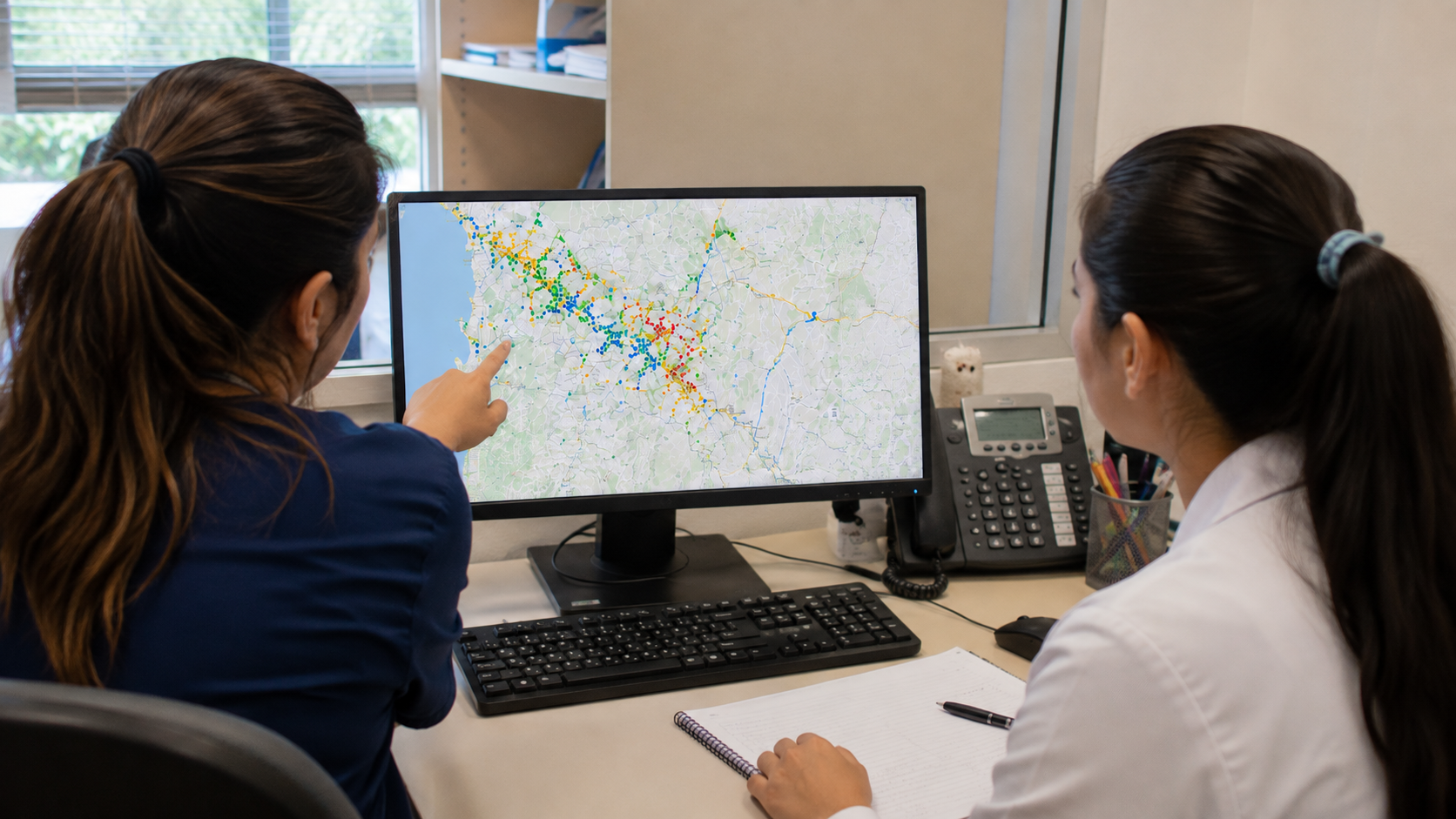
SISTAM brings together functional modules that enable health care teams to transform information into concrete actions. One of the main modules is “Territory,” which allows for the geographic visualization of the population and segmentation based on health programs, vaccination history, priority groups, and other relevant variables. This makes it possible to identify, for example, patients who need to be reminded to attend follow-up appointments or areas where preventive activities should be carried out. To strengthen this analysis, SISTAM integrates with ministerial platforms such as SITS and Geoportal.
Teams can contact the population via SMS, VMS, or WhatsApp to organize vaccination campaigns, EMP initiatives, follow-ups, or send self-management content. In implementation cases, attendance at health campaigns has
quadrupled after incorporating SISTAM’s messaging system.
Another key feature is Appointment Management, which allows for confirming, declining, reminding, or canceling appointments. SISTAM integrates with local systems such as FONENDO, SSASUR, SINETSUR, and SISMAULE, as well as the private platform RAYEN. Timely confirmation enables the recovery of declined appointments and their re-offering, achieving a 94% appointment reallocation rate.
The platform also includes an Adherence module, which uses sociodemographic and clinical variables, along with attendance history, to estimate the likelihood that a patient will attend an appointment. Based on this profile, SISTAM defines
personalized contact strategies, determining how many messages to send, when to send them, and through which channel.
The results show a sustained effect on attendance, with an average improvement of 10 percentage points following the implementation of SISTAM. This impact can be even greater depending on the context and users’ interaction with the communication tools. For example, among those who interact with the WhatsApp chatbot, an increase of more than 20% in attendance has been observed. Added to this is an improvement in administrative efficiency: according to professionals who currently use SISTAM, tasks associated with appointment management are completed 90% faster than when done manually.
The user experience has also been positive. In a sample of 377 people from different municipalities, 90% indicated that the messages helped them remember their appointments, 86% felt that they improved the quality of care at the CESFAM, and 96% said they would like to continue receiving messages about appointments and self-management.
Thus, SISTAM integrates geographic coverage, communication, interoperability, and predictive analytics to support the process from identifying a healthcare need to contacting and following up with individuals.