


The company, which grew out of research conducted at the University of Concepción, will showcase its QMUV and QStep medical devices for the first time at ExpoSalud—solutions developed and manufactured in Chile to support rehabilitation and movement assessment.
Date
Wednesday 15 de July de 2026
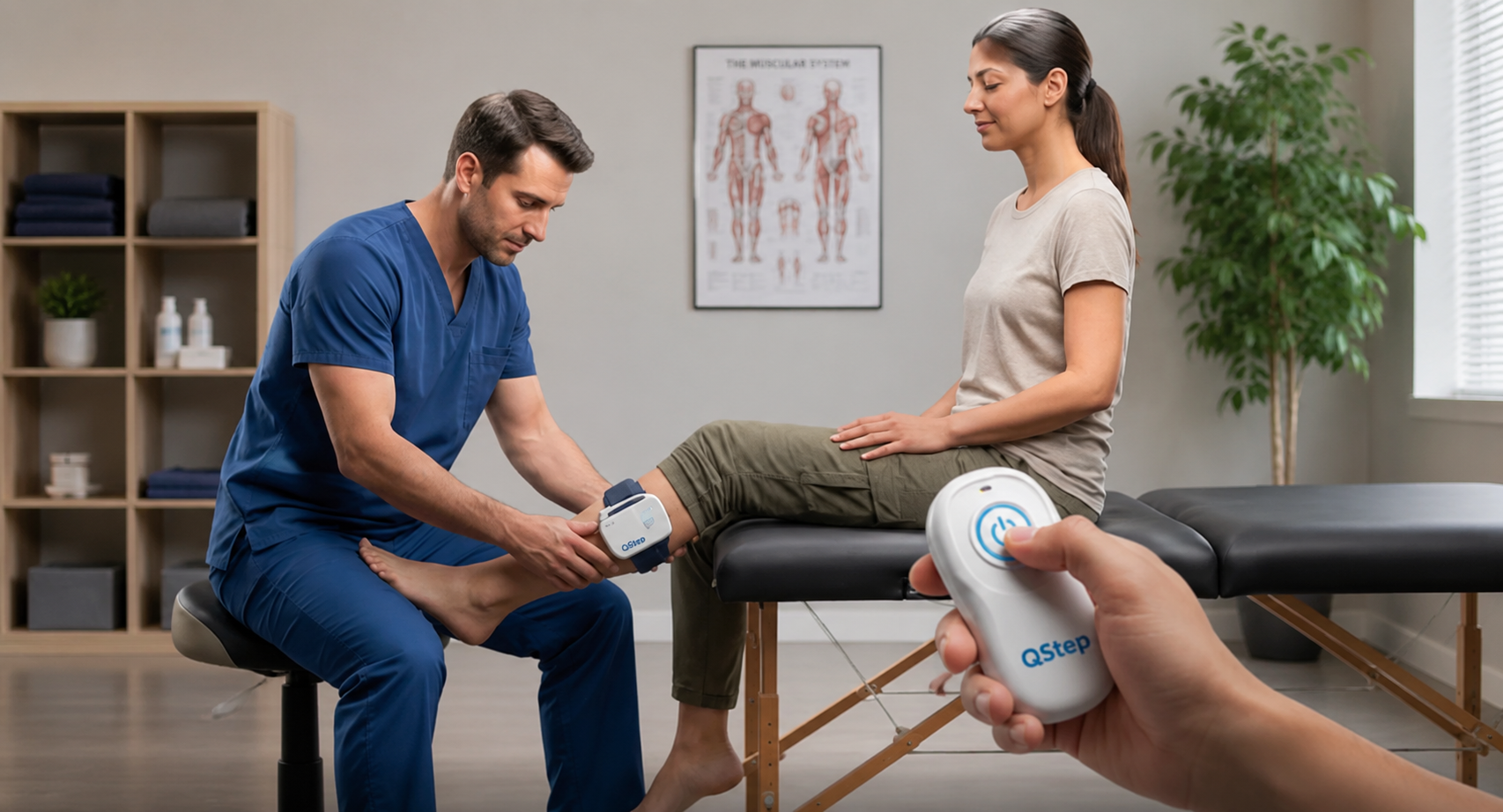
Medical innovations developed in Chile will take center stage at ExpoSalud 2026. Neurotech will participate in the exhibition for the first time, showcasing QMUV and QStep, two medical devices developed and manufactured in Chile that aim to provide precision, accessibility, and ease of use for people who have suffered a stroke and are left with mobility difficulties.
“ExpoSalud is the ideal venue to demonstrate that precision innovation is also taking place in Chile, because it brings together medical technology decision-makers in one place,” says Neurotech’s general manager, Benjamín Germany.
Neurotech is a science- and technology-based company that emerged from research conducted at the University of Concepción. Its origins lie in research in biomedical civil engineering, carried out with the aim of addressing a specific need in the healthcare sector: making high-precision medical technology accessible to clinical professionals through locally developed solutions.
During ExpoSalud, the company will showcase QMUV, a portable platform that enables objective assessment of patients’ gait and balance using digital tools, and QStep, a functional electrical stimulation (FES) device for the treatment of foot drop, available both for clinical use and to support patients in their daily rehabilitation process.
Attendees will be able to see both innovations in action and observe how these technologies help improve clinical assessment and support the functional recovery of people who have suffered a stroke.
“Our goal has been to put cutting-edge engineering at the service of healthcare professionals and to provide access where none existed before. And our challenge is to continue growing as a tech startup without losing the scientific and clinical rigor that characterizes each of our developments,” concludes Germany.
The company designs and manufactures its medical devices in Chile under ISO 13485 certification—an approach that has allowed it to stand out in a market dominated by imported solutions. That, they say, is part of what makes their solutions so effective.
“We can tailor the technology to the real needs of the Chilean and Latin American healthcare systems, provide local support, and offer solutions at a more affordable cost. Our inclusion in the World Health Organization’s Compendium for resource-limited settings confirms that this technology can and should scale beyond Chile,” he emphasizes.
Indeed, Neurotech’s inclusion in this WHO document reinforces the opportunities for international expansion of the solutions developed by the Chilean company, as they are adapted to healthcare systems with budgetary constraints.
According to Benjamín Germany, participation in ExpoSalud will be primarily focused on generating new business opportunities and strengthening ties with institutions and professionals in the sector.
“We want to build long-term relationships with those who evaluate technology for their healthcare facilities. First and foremost, we are a technology development company, so we are always looking at the needs of the healthcare industry,” he says.
ExpoSalud 2026, organized by FISA—part of the GL events Group—will take place November 10–12 at Espacio Riesco. The exhibition will bring together companies, decision-makers, and professionals from across the healthcare industry, in addition to offering a program of workshops, talks, and panel discussions that will address the key trends shaping the sector’s future.